Pool Replastering Orlando: When to Replaster vs. Resurface Your Pool
A swimming pool rarely fails all at once. More often, it declines in stages. The waterline gets rough. Faint stains stop brushing off. Small pits appear underfoot. Then one day the finish no longer looks tired, it looks spent. At that point, many Orlando homeowners start searching for pool resurfacing near me and immediately run into a practical question: does the pool need replastering, or is it time for a broader resurfacing job with a different finish altogether?
That distinction matters. The wrong choice can leave you paying twice, once for a cosmetic patch and again for the work the shell truly needed. The right choice can restore the pool’s appearance, improve comfort, reduce maintenance headaches, and extend the surface life by many years.
In central Florida, this decision is especially important because pools work hard here. Long swim seasons, intense UV exposure, heavy rain, warm water, and constant chemical demand put finishes under real pressure. What might pass for acceptable wear in a milder climate often signals a shorter runway in Orlando. Homeowners looking into pool replastering Orlando services or pool resurfacing Orlando FL projects benefit from understanding what each option actually involves before comparing quotes.
What homeowners usually mean by replastering and resurfacing
People often use the terms interchangeably, but on a job site they are not always the same thing.
Replastering usually refers to applying a new plaster-based interior finish over a properly prepared pool shell. Traditional white plaster, also called marcite in many markets, is the classic example. When someone asks for pool plastering Orlando, they are often thinking of this specific finish category, even if their contractor later presents upgraded options such as quartz or pebble.
Resurfacing is the broader term. It can include replastering, but it may also involve changing the finish type, repairing more extensive substrate damage, updating tile or coping, correcting surface irregularities, or addressing bond failures and hollow spots before the new interior is installed. In other words, every replaster job is a form of resurfacing, but not every resurfacing project is simply a replaster.
That distinction becomes clear once the old finish comes off. If the shell underneath is sound and the wear is limited to the top layer, replastering may be enough. If the bond coat has failed, the shell has cracks that require structural attention, or the owner wants to upgrade from marcite to a more durable aggregate, the job moves into full resurfacing territory.
The signs your pool is nearing the end of its current finish
Most pool owners do not need a finish expert to tell them when something has changed. They feel it first. The floor is rougher than it used to be. Vacuum heads catch in small pits. Brushing no longer revives the color. The pool looks clean, but never quite looks fresh.
Some warning signs are cosmetic. Others are structural. Learning the difference helps you know whether a straightforward plaster renewal is still on the table.
Aging plaster commonly shows mottling, etching, discoloration, and a dull chalky appearance. In Orlando, I often see plaster that has thinned unevenly on steps, benches, and shallow entries first. Those areas get the most foot traffic and tend to reveal wear earlier. If the finish still feels largely intact, and the problems are mostly aesthetic with minor roughness, replastering may be sufficient.
A more serious pool surface often reveals delamination, clusters of pits, exposed aggregate where it should not be exposed, craze cracking, or recurring stains that trace back to deeper surface breakdown rather than simple mineral deposits. If there are pool tile and coping replacement orlando hollow-sounding areas when tapped after draining, the bond between layers may be compromised. That is usually a resurfacing conversation, not just a fresh coat conversation.
Leaks can complicate the picture. A leaking pool does not always need resurfacing, but if cracks in the finish tie into movement or substrate issues, surface renewal alone will not solve the problem. That is where experienced inspection matters. A beautiful new finish laid over unresolved shell or crack issues is expensive denial.
When replastering is the right choice
Replastering makes sense when the pool shell is sound, the finish has simply reached the end of its service life, and the owner wants to restore appearance and function without changing the overall finish system.
In practical terms, that often means a concrete or gunite pool with old plaster that has become rough, discolored, etched, or lightly pitted over time. The underlying structure is stable. The tile line is in decent condition. There are no major bond failures. The owner may want a clean reset, not a redesign.
For many older Orlando pools, especially those finished in standard white marcite, this is a common scenario. A well-executed marcite pool resurfacing Orlando project can bring the pool back to a crisp, classic look at a lower initial cost than premium aggregate finishes. Marcite remains popular because it is familiar, attractive when done well, and relatively economical.
Replastering is also appropriate when the owner intends to sell within a few years and wants a fresh, serviceable finish rather than the higher upfront investment of pebble or polished aggregate. That does not mean choosing the cheapest bid. It means matching the finish to the owner’s time horizon and maintenance goals.
Another reason to replaster rather than fully redesign is compatibility. Some pools are better candidates for staying within the same finish family, especially when the existing profile, fittings, and details align well with a straightforward plaster renewal. In those cases, a disciplined surface prep, correct bond coat application, proper material mix, and careful startup can deliver a strong outcome.
When resurfacing is the wiser investment
There comes a point when replacing like for like is not the best use of money. If the pool has recurring surface issues, widespread delamination, major roughness, or an outdated finish that has already proven short-lived under the owner’s maintenance conditions, resurfacing with a different material can be the better long-term decision.
This is where homeowners start comparing finish types more seriously. In the Orlando market, that often means weighing standard plaster against quartz, pebble, or polished aggregate options. Searches for pool resurfacing Orlando frequently lead to these upgrades because they promise longer wear and a more premium look, particularly for heavily used pools.
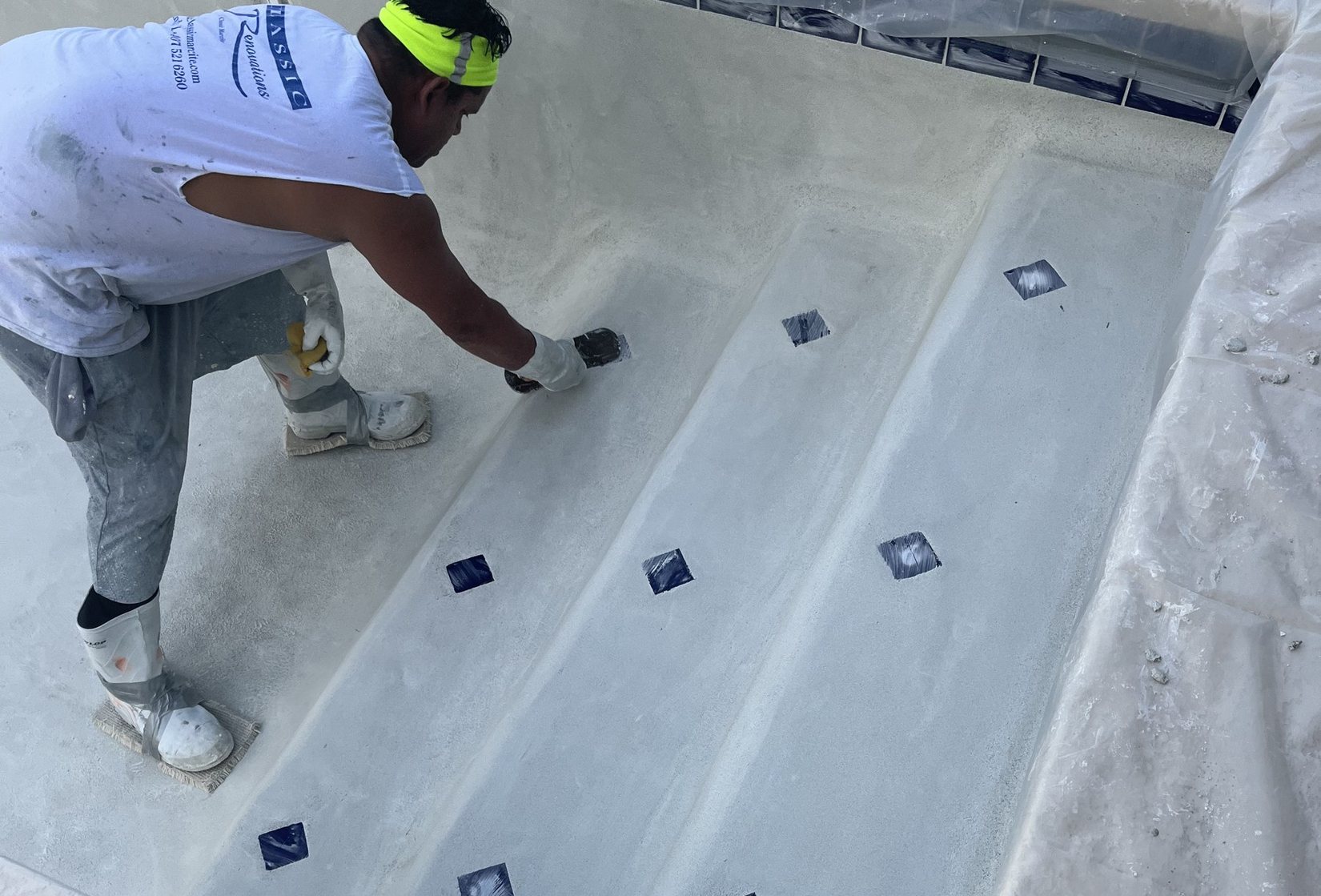
Resurfacing is also the better path when the project includes more than the interior finish. Perhaps the waterline tile is dated, the coping is cracked, the spa spillway needs attention, or there are step marker upgrades planned at the same time. Bundling those elements into one coordinated renovation often makes more sense than replastering now and tearing into adjacent materials later.
In my experience, owners who regret choosing simple replastering are usually dealing with one of two situations. Either the existing surface condition was worse than they realized, or they underestimated how much they cared about feel, color depth, and maintenance burden after the job was done. A plaster pool can look excellent, but a homeowner who wants a more durable, textured finish with richer water color may feel they settled too soon.
The finish options Orlando homeowners compare most often
A pool interior finish is not just color. It affects texture underfoot, stain visibility, chemical tolerance, repairability, and life expectancy. The right choice depends on how the pool is used, how carefully water chemistry is maintained, and how long the owner plans to stay in the home.
Here is the short version of how the most common options compare:
| Finish type | Typical look and feel | Relative upfront cost | General longevity range | |---|---|---:|---:| | Marcite or white plaster | Smooth at first, classic bright appearance | Lower | Often around 5 to 10 years, depending on care and conditions | | Quartz finish | More color depth, slightly textured, more durable than plain plaster | Moderate | Often around 7 to 12 years or more | | Pebble finish | Natural appearance, more texture, very durable | Higher | Often around 10 to 20 years or more | | Polished aggregate | Premium visual depth, smoother than exposed pebble, upscale finish | Higher to premium | Often comparable to other high-end aggregate systems |
Those ranges vary with chemistry, workmanship, circulation, bather load, sun exposure, and startup quality. A poorly maintained pebble finish can age faster than a well-maintained plaster finish. Material alone does not guarantee longevity.
For homeowners considering a quartz pool finish Orlando project, quartz often lands in the practical middle. It offers better stain and etch resistance than plain plaster, a wider color palette, and a refined appearance without the heavier texture of traditional pebble. It is a strong fit for families who want a visible upgrade but still care about budget.
Those looking into pebble tec pool finish Orlando jobs are usually prioritizing lifespan and aesthetics. Pebble finishes have earned their reputation for durability, especially in demanding climates. They also produce a more natural, resort-style water appearance. Texture matters here, though. Some swimmers love the grip and character. Others prefer a softer feel on steps and tanning ledges.
That preference is one reason pebble tec pool resurfacing sometimes leads homeowners toward polished or refined aggregate systems. A polished aggregate pool finish can preserve the visual richness of stone while delivering a more comfortable surface. For clients focused on luxury appearance and tactile comfort, this category deserves serious attention. It is likely what many people mean when they search for a polished aggregate pool finish, even if the keyword list occasionally appears with a stray letter attached.
Orlando conditions change the equation
Pool finish advice that sounds reasonable in a national article can miss what Florida does to a pool. Orlando is not a niche climate for pool owners. It is a demanding one.
The long swim season means surfaces endure more brushing, more foot traffic, and more chemical adjustment over the course of a year. Summer rains can dilute chemistry fast, especially alkalinity and calcium balance, and many pools see repeated cycles of correction after storms. Warm water increases chlorine demand. High UV exposure accelerates visible fading in some pigments. The result is that marginal finish choices, sloppy startup procedures, and poor water balance show up sooner here.
I have seen pools less than a decade old that looked older than their years because chemistry drifted repeatedly or because the startup after plastering was rushed. I have also seen well-maintained Orlando pools exceed expected finish life because the owner kept consistent records, used a reliable service company, and did not let small problems linger.
That is why local experience matters when comparing pool resurfacing Orlando FL contractors. The material should fit not just the budget, but the climate and the owner’s habits.
Cost matters, but the cheapest number is often the most expensive choice
Every resurfacing conversation eventually comes down to money. It should. Pool renovation is a meaningful expense, and there is no value in pretending otherwise. But homeowners benefit from thinking in terms of lifecycle cost rather than invoice cost alone.
A lower-priced marcite replaster may be the smartest choice for one owner and the wrong choice for another. If you expect to remain in the home for many years, use the pool frequently, pool resurfacing orlando and care deeply about finish longevity, a more durable aggregate surface may cost less over time even with a higher upfront price. If you plan to move soon, or if the pool sees only occasional use, the economics can lean the other way.
The most expensive mistakes I see are not always premium materials. They are premature failures caused by inadequate prep, vague scope, or bids that leave too many decisions unspecified. A quote should clearly identify demolition depth, crack repair approach, bond coat process, finish type, startup responsibility, curing expectations, and what adjacent materials are included or excluded.
A resurfacing bid that looks surprisingly low often assumes surprisingly little.
Questions worth asking before you sign
A good contractor will not be annoyed by careful questions. They should expect them, especially for pool replastering Orlando and pool plastering Orlando projects where the quality difference between crews can be substantial.
Ask what the old surface condition suggests about the shell. Ask whether hollow spots, bond failures, or crack repairs are included if uncovered. Ask what finish the contractor believes suits your water chemistry discipline, not just your design taste. Ask who handles startup and whether they provide written instructions. Ask how long the pool should remain out of service and what the curing timeline means in practical terms.
Most important, ask what can shorten the life of the new finish after installation. The answer should not be vague. Poor chemistry control, aggressive brushing practices, scale buildup, low calcium, acidic water, and delayed startup care all have real effects. An experienced contractor should be able to discuss those without leaning on scare tactics.
A simple way to decide between replastering and resurfacing
If you need a practical decision framework, use this:
- Choose replastering if the shell is sound, the wear is mostly surface-level, and you want a straightforward restoration.
- Choose resurfacing with an upgraded finish if the current surface has broader failure, you want more durability, or the project includes tile, coping, or design updates.
- Pause and investigate further if there are cracks, hollow areas, recurring stains tied to substrate failure, or unexplained water loss.
- Base the finish selection on how long you plan to own the pool, how often it is used, and how disciplined water maintenance will be.
- Compare contractors by scope clarity and local track record, not by price alone.
That framework will not replace a site inspection, but it does keep the decision grounded in the right variables.
What the process usually looks like
Homeowners are often surprised that the visible finish is only part of the job. The durability of a new surface depends heavily on preparation and startup.
The pool is typically drained, the old finish is removed or mechanically prepared, weak areas are addressed, and the substrate is evaluated. At that stage, hidden conditions become visible. This is when minor assumptions can turn into major change orders, so clear communication matters. After repairs and prep, the new finish is applied, exposed or polished as required by the material system, and the pool is filled carefully. Startup chemistry begins immediately and should be handled with precision.
The first month matters more than many owners realize. Fresh plaster and aggregate finishes need balanced water and attentive brushing during curing. Neglecting that period can lock in avoidable defects early. It is one reason reputable local companies place so much emphasis on startup instructions.
The human side of the decision
Not every pool decision is purely technical. Some owners are tired of apologizing for how their backyard looks when guests come over. Others want a finish that feels better on a child’s feet. Some simply want the water color they have admired in other pools for years. Those are legitimate goals.
One family I worked with had a pool that was still technically serviceable, but the finish had become so mottled and rough that they avoided using the shallow shelf altogether. They started by asking about marcite pool resurfacing Orlando because it seemed like the basic fix. After discussing use patterns, ownership horizon, and comfort, they opted for a quartz finish instead. It was not the cheapest path, but it aligned better with how they actually lived with the pool. Three summers later, they still mention the difference in feel every time the subject comes up.
Another owner went the opposite direction and made the right call for his situation. He planned to sell within two years, had a structurally sound pool, and needed a clean, bright surface without overspending. A disciplined replaster was the sensible answer. Not every pool needs a premium finish to be a smart investment.
Choosing the right contractor in a crowded market
The Orlando area offers plenty of companies advertising pool resurfacing Orlando, pool replastering Orlando, and related services. The challenge is not finding names. It is separating polished marketing from dependable workmanship.
Pay attention to how a contractor talks about surface prep, crack assessment, startup care, and finish compatibility. Those topics reveal more than showroom photos do. Ask to see projects that are not just newly completed, but several years old. A finish looks its best in the first month. The better test is how it ages.
Look for specificity rather than slogans. A contractor who can explain why one pool is a good candidate for replastering and another needs broader resurfacing is usually worth listening to. A contractor who pushes the same finish on every customer, regardless of use case, is telling you more about inventory comfort than project fit.
The choice that usually holds up best
When the shell is healthy and the existing finish has simply worn out, replastering remains a valid, often cost-effective solution. For many pools, especially older marcite interiors, it restores function and appearance without unnecessary scope.
When the pool shows broader deterioration, when the owner wants greater durability, or when the renovation includes adjacent upgrades, full resurfacing with quartz, pebble, or polished aggregate is often the better investment. In Orlando’s climate, that longer-view approach frequently pays off.
The key is not choosing the most expensive finish or the most familiar one. It is choosing the finish and scope that match the actual condition of the pool, the realities of Florida ownership, and the way you intend to use the backyard in the years ahead. If you start from that point, the difference between replastering and resurfacing becomes much clearer, and the money follows the logic rather than the sales pitch.
Classic Marcite is a swimming pool contractor in Orlando, FL, resurfacing and renovating residential and commercial pools since 1988: marcite plaster, quartz, Pebble Tec and polished aggregate finishes, pool remodeling, pool deck resurfacing, tile and coping replacement, and pool repair.
430 Fairvilla Road, Orlando, FL 32808 · Serving Orlando, Windermere, Dr. Phillips, Winter Park, Maitland, Lake Mary and Heathrow
Phone: (407) 521-6260
Website: classicmarcite.com
Find us on Google Maps